
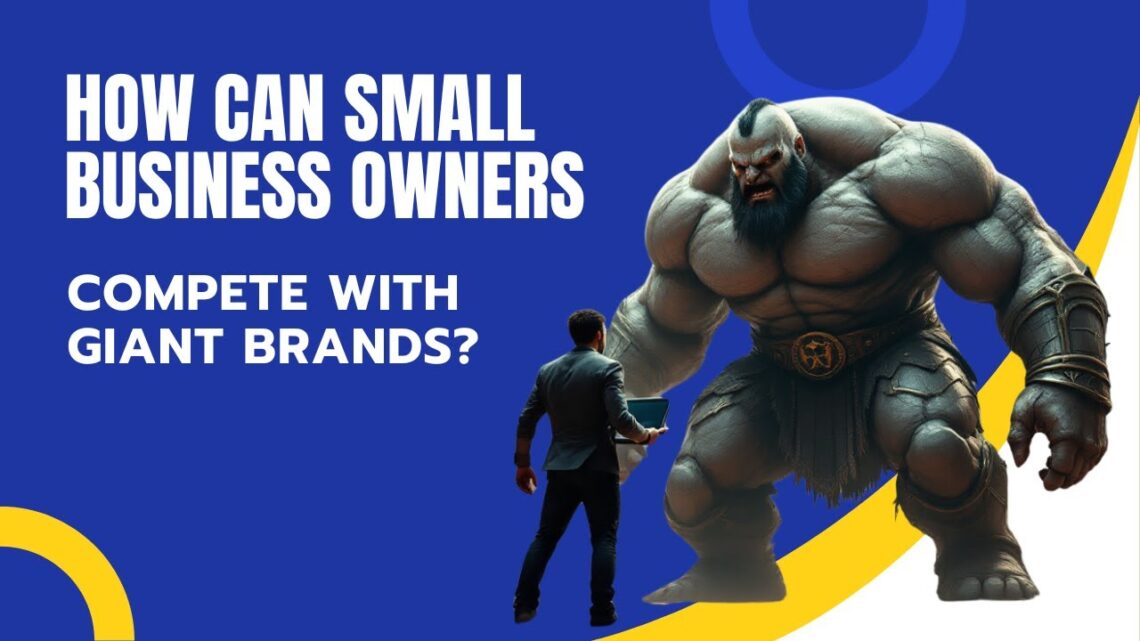
In today’s hyper-connected world, being small is no longer a disadvantage—it’s a secret weapon. With the right technology, mindset, and strategy, small businesses can challenge industry giants and win.
It’s not about having the most resources. It’s about using your resources smarter. Agility, innovation, and customer intimacy are the new competitive advantages.
💡 The Playing Field Has Changed
Gone are the days when only big corporations had access to advanced tools, talent, and reach. Today, small businesses have unprecedented access to:
- AI-powered marketing platforms
- Cloud-based operations and automation tools
- Global freelancer networks
- Advanced analytics and customer insights
What once required departments of specialists can now be done with a smart tool, a lean team, and a clear vision.
🚀 1. Automate to Accelerate
Manual processes slow growth. By automating repetitive tasks, small businesses free up time and energy for strategy, creativity, and customer service.
Key areas to automate:
- Email marketing (e.g., Mailchimp, Klaviyo)
- Social media scheduling (e.g., Buffer, Hootsuite)
- CRM and lead follow-up (e.g., HubSpot, Zoho)
- Invoicing and payments (e.g., QuickBooks, FreshBooks)
Smart scaling starts with automation.
📊 2. Use Data Like a Pro
Big brands don’t just guess—they analyze. And now, so can you.
Use tools like:
- Google Analytics for website behavior
- Hotjar or Microsoft Clarity for user journey insights
- Facebook Pixel / Conversion APIs to track ROI
Track what matters: customer behavior, acquisition costs, lifetime value, and conversion rates.
💡 If you can’t measure it, you can’t improve it.
🤖 3. Tap Into AI & Emerging Tech
AI is no longer the future—it’s now. Small businesses can harness AI to:
- Generate content (e.g., ChatGPT, Jasper)
- Personalize email campaigns
- Optimize ad targeting
- Predict customer behavior
- Streamline customer service with chatbots
The result? Faster decisions, smarter campaigns, and better customer experiences.
🤝 4. Outsource Strategically
You don’t need a big team to act like a big business. You just need the right team—even if it’s part-time or remote.
Outsource:
- Design and branding
- Paid advertising management
- Web development
- Content writing
- Admin and bookkeeping
Use platforms like Upwork, Fiverr, or specialized agencies to plug skill gaps without full-time overhead.
🌟 5. Double Down on Customer Experience
This is where small businesses truly shine.
- Personalize interactions
- Respond faster than the big guys
- Add human touches: thank-you notes, behind-the-scenes content, loyalty perks
- Turn customers into advocates
📣 Your reputation is your biggest marketing asset.
🧠 6. Keep Your Brand Consistent
Big brands win because they’re unforgettable. Small brands can too—through consistent, strategic branding.
- Create a recognizable visual identity
- Define your brand voice and values
- Be clear on your promise and positioning
- Tell your story across all touchpoints
🎨 Whether it’s your website, packaging, or Instagram feed—make it unmistakably you.
⚡ 7. Move Fast, Stay Nimble
Small businesses can pivot faster than large corporations weighed down by layers of approval.
Use that to your advantage:
- Test new ideas quickly
- Jump on emerging trends
- Adjust campaigns in real time
In a market that changes daily, speed beats size.
🛡️ David Still Beats Goliath
History loves an underdog—and so does today’s marketplace.
Armed with the right tools, a clear vision, and relentless focus, small businesses can:
- Compete on quality
- Win with creativity
- Build loyal communities
- Scale without selling out
👉 Being small is no longer a weakness. It’s your edge.
✅ Final Thought: Scale With Intention
Don’t just grow. Grow with purpose.
Scaling smarter means:
- Choosing quality over quantity
- Investing in what matters
- Using tech to amplify—not replace—your human touch
Because in 2025 and beyond, it’s not about being the biggest.
It’s about being the boldest, the smartest, and the most connected to your customer.